
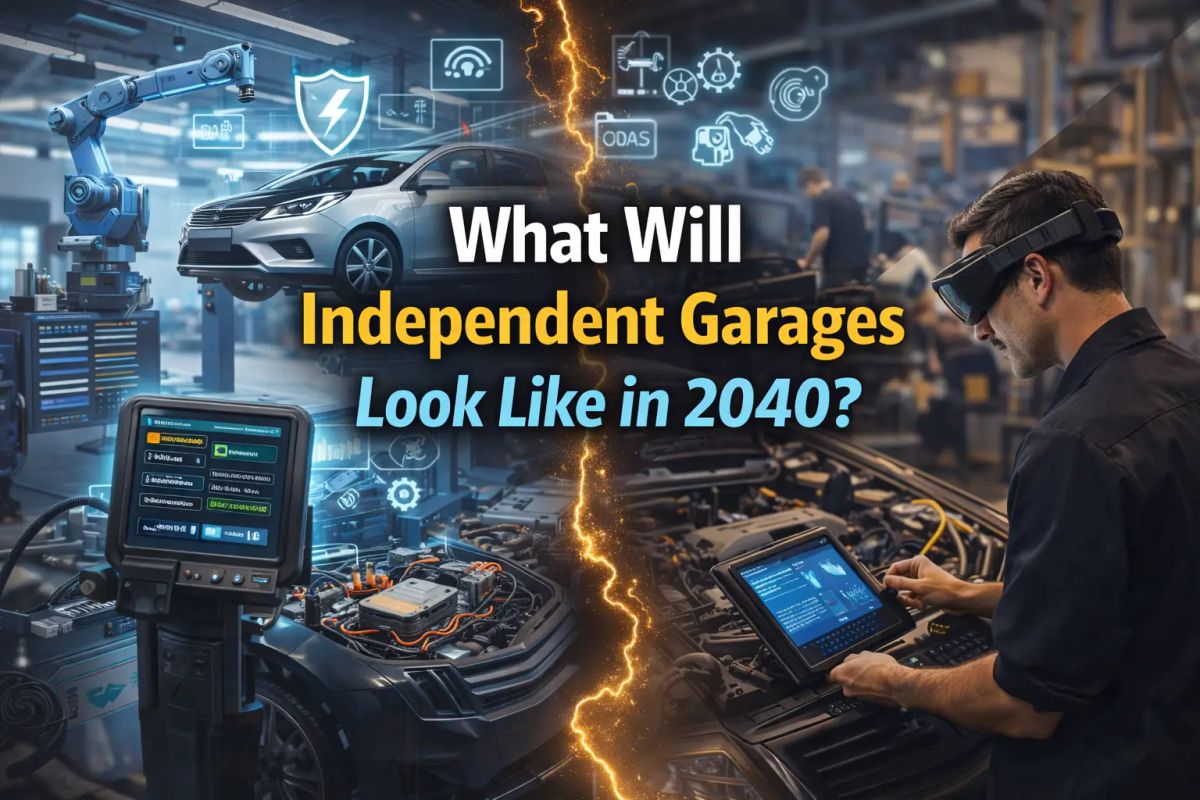
What Will Independent Garages Look Like in 2040?
By 2040, the UK vehicle fleet is expected to be dominated by electric and zero-emission vehicles. Internal combustion cars will still exist, but they will represent a much smaller and increasingly niche share of vehicles on the road.
Independent garages that survive and thrive will look very different from traditional engine-focused workshops. Diagnostics, software, calibration, battery health checks, high-voltage safety and electrical repairs will form the core of daily work.
The 2040 Vehicle Fleet: What to Expect
By 2040, most credible forecasts suggest 70-85% of UK vehicles will be battery electric, with the remainder split between plug-in hybrids, hydrogen and a declining ICE segment.
Key implication: Garages focusing almost entirely on ICE repairs will struggle due to reduced volume. Those with EV and electrical capability will dominate.
Source: UK Government - Road to Zero Strategy
What Work Will Garages Be Doing in 2040?
Routine mechanical work will not disappear. Suspension, steering, tyres, brakes, HVAC systems and body-related repairs will remain essential, regardless of powertrain.
The difference is that fewer jobs will revolve around engines, fuel systems and exhausts.
What Will a Typical 2040 Independent Garage Look Like?
Let's paint a picture of a thriving independent garage in 2040:
Physical Workshop Changes
- High-voltage isolation equipment and safety zones
- Advanced diagnostic tools for multiple EV platforms
- ADAS calibration bays with target boards and laser alignment
- Fewer engine hoists, more electronic test equipment
- Software licensing for OEM diagnostic systems
- Electric vehicle lifts designed for battery pack access
Staff Skillsets
- IMI Level 2-3 HV certification as standard
- Electrical and electronics expertise more valuable than mechanical
- Software troubleshooting and network diagnostics (CAN, LIN, Ethernet)
- Continuous training as vehicle technology updates frequently
- Hybrid skills - maintain ICE capability for niche/enthusiast work
Business Model
- Higher diagnostic fees reflecting skill level and equipment costs
- Partnerships with battery specialists for complex pack repairs
- Subscription revenue from software and calibration services
- Extended warranties and service plans for EV customers
- Specialist niche services (e.g., classic ICE restoration, EV conversions)
Will There Be Room for ICE Specialists?
Yes, but it will be a niche market. By 2040, ICE vehicles will be:
- Older vehicles (15+ years) kept on the road by cost-conscious owners
Running a UK garage?
Independent UK garages use AutoChain to win more repeat work, cut admin, and compete with national chains.
Start 14-day free trial →- Classic and enthusiast cars
- Commercial vehicles in sectors slow to electrify
- Regional variations where EV adoption lagged
Some garages may choose to specialise in ICE repairs for this niche, similar to how classic car restoration shops operate today. This can be a viable strategy, but it requires accepting a smaller addressable market.
Regional Differences in 2040
Not all parts of the UK will transition at the same pace:
Garages in rural or low-income areas may have a longer runway for ICE work, but even they will need some EV capability by 2040.
What Independent Garages Must Do Now
The businesses that thrive in 2040 are the ones taking action today:
- ✅ Start EV training now - Even basic Level 1-2 certification prepares your team
- ✅ Invest in diagnostics - Modern diagnostic tools work on ICE and EV vehicles
- ✅ Build partnerships - Collaborate with EV specialists for complex work
- ✅ Market your evolving capability - Let customers know you're EV-ready
- ✅ Streamline operations - Garage management software frees time and budget for training and tooling
- ✅ Plan financially - Budget for training, tools and certification over 5-10 years
- ✅ Stay informed - Join trade bodies, attend industry events, network with other garages
The garages that wait until 2035 to start this process will be too late.
Related article: Will Independent Garages Survive the EV Transition?
The Bottom Line: Evolution, Not Extinction
Independent garages are not facing extinction, but they are facing transformation. The future belongs to workshops that:
- Embrace electrical and diagnostic expertise
- Layer EV skills onto existing mechanical competence
- Invest in training and tooling incrementally
- Adapt their business model for higher-skill, higher-value work
- Maintain some ICE capability for niche demand
By 2040, the most successful independent garages will be unrecognisable from 2026 — but they will still be independent, still be local, and still be essential to motorists.
The EV transition is not the end of the independent garage. It is the beginning of a new chapter.
Why Choose AutoChain
AutoChain is building the future of vehicle servicing today. Our network includes:
- ⚡ EV-ready garages with high-voltage certification
- 🔧 Experienced ICE specialists for traditional vehicles
- 📱 Digital service history for all vehicle types
- 💷 Transparent pricing without dealer premiums
Whether you drive an EV today or plan to in the future, AutoChain connects you with forward-thinking independent garages.
Find a garage near you or learn more about our vision.
Related Articles:
- Will Independent Garages Survive the EV Transition?
- What Maintenance and Repairs Do Electric Cars Need?
- EV Training for Independent Garages
- How Long Will Petrol and Diesel Repairs Still Be Needed?
- Will EV Repairs Be Controlled by Dealers?
Further Reading:
Frequently Asked Questions
Will independent garages survive the transition to electric vehicles?
Yes — the majority of well-prepared independent garages will survive and many will thrive during the EV transition. The UK's 30,000-plus independent garages service the vast majority of the country's 30+ million vehicles. As EVs age out of manufacturer warranty periods, they will need independent servicing just as petrol and diesel vehicles do today. The key requirement is investment in technician training (IMI EV qualifications) and basic EV-compatible diagnostic equipment. Garages that make these investments now are positioning themselves for a significant and growing customer base. Those that do not adapt may struggle as their ICE-only customer base gradually shifts to EVs over the next 15–20 years.
What new skills will garage technicians need by 2040?
By 2040, automotive technicians will need skills spanning both traditional mechanical maintenance (still relevant for the large existing ICE fleet) and high-voltage EV systems, battery diagnostics, electric motor servicing, and thermal management systems. ADAS calibration will be essential, as driver assistance systems become more complex and require recalibration after any front-end work. Software diagnostics and over-the-air update management will become increasingly important as vehicles become more software-defined. The IMI and City & Guilds are continually updating their qualification frameworks to reflect this evolution. Technicians who invest in continuous professional development throughout their careers will have strong employment prospects regardless of the pace of EV adoption.
How will connected car technology change garage operations?
Connected vehicles increasingly transmit diagnostic data directly to manufacturers and, where the owner consents, to third-party service platforms. This creates opportunities for predictive maintenance — identifying components likely to fail before they do, based on real-world usage data. For independent garages, platforms like AutoChain that integrate vehicle data with service booking and customer communication will become increasingly important for staying competitive. By 2040, most new vehicles will have some form of remote diagnostics capability, and garages that can receive and interpret this data will be able to offer proactive service recommendations rather than waiting for customers to report a fault.

Ready to run a smarter garage?
Start your 14-day free trial today.
No card required. Get set up in under 10 minutes.